|
Endspiel Dame gegen Bauer(n) auf der
vorletzten Reihe |
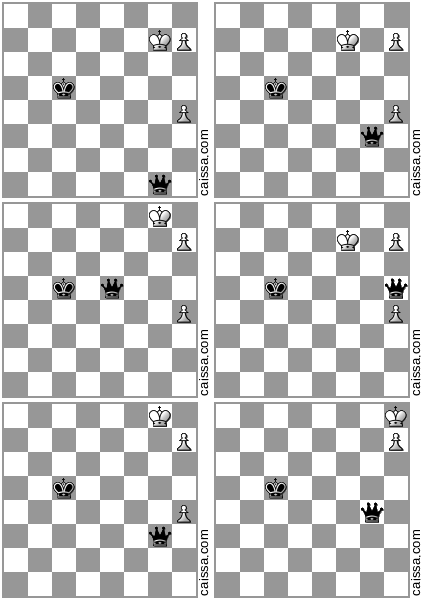
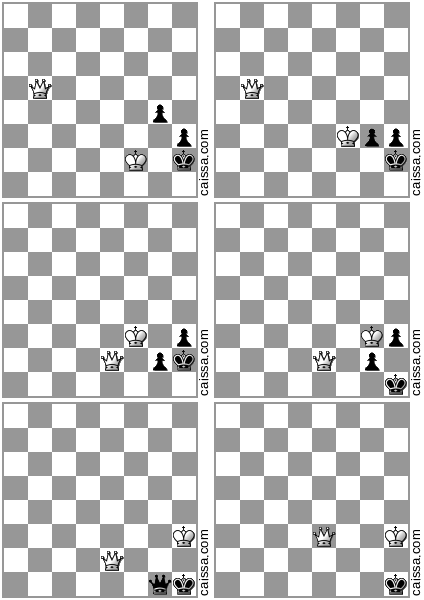
Das Endspiel ist meist unentschieden, wenn die Bauernpartei einen
a-, c-, f oder h-Bauern hat. Wegen drohenden Patts kann der König nicht näher an den Bauern herankommen.
|
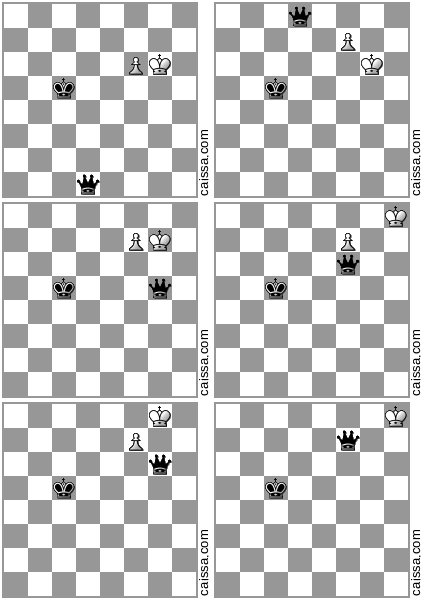
| Das Endspiel ist meist für die Damenpartei gewonnen, wenn die
Bauernpartei einen b-, d-, e- oder g-
Bauern hat. |
Hat die Bauernpartei mehrere Bauern,
so muß sie versuchen,
einen a-, c-, f oder
h-Bauern zu halten, um das Remis
zu halten. |
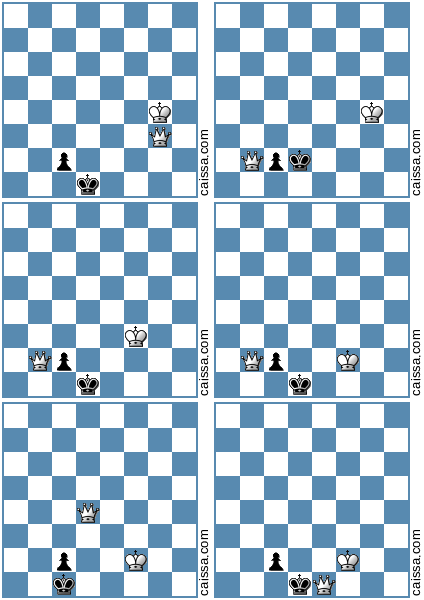 |
Beispiel für Ausnahme / Example of exception
1.Qb3 Kd2 2.Qb2 Kd1
{Kd3 is a little bit better but still mate
in 9!}
3.Kf3 Kd2
{3. ... c1=Q 4.Qe2#}
4.Kf2 Kd1 5.Qd4+ Kc1 6.Qb4 Kd1 7.Qe1# |
| [start] |
(Study by Lolli, 1763) |
|